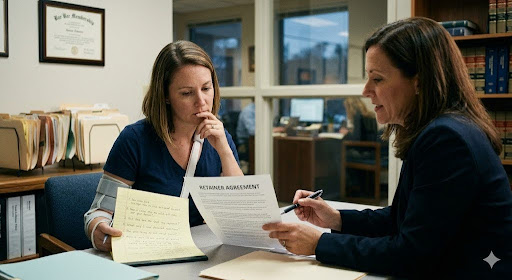
Before You Sign the Retainer, There Are Five Things the Agreement Won’t Tell You

Before You Sign the Retainer, There Are Five Things the Agreement Won’t Tell You


The call I remember most clearly came in around 11 p.m. on a Tuesday. A woman had been rear-ended three days earlier. Her neck hurt, her car was totaled, and she’d already missed two shifts at work. She wasn’t calling because she’d found us through some careful research process. She was calling because a lawyer’s billboard was the last thing she’d seen before falling asleep, and she was scared she was running out of time.

She asked me one question before anything else: “Is my case even worth a lawyer’s time?”

That question—and the fear underneath it—is why I’m writing this. Because the answer is almost always yes, your situation deserves a real conversation. But the more important question, the one nobody was helping her ask, was whether this particular lawyer was worth her time.

The Difference Between a Lawyer Who Handles Injury Cases and One Who’s Built for Them

Not every attorney who accepts personal injury cases has the same depth of experience. That gap matters more than most people realize when they’re comparing options from a phone screen.

A general practice attorney might handle a car accident case alongside a divorce, a contract dispute, and a real estate closing in the same week. That’s not automatically disqualifying. But it raises a real question: how familiar are they with the specific tactics insurance adjusters use, the medical documentation that supports soft tissue claims, or the local court dynamics that affect whether a case settles favorably or drags on for years?

A ma personal injury lawyer who focuses specifically on injury cases tends to accumulate patterns of experience that general practitioners simply don’t—relationships with medical experts, familiarity with how insurers value certain injury types, and a clearer sense of when a settlement offer is reasonable versus when it’s insultingly low.

Two questions worth asking directly:

  • What percentage of your current caseload is personal injury?
  • How many cases like mine have you handled in the last two years?

You’re not being rude. You’re being a smart consumer of legal services, which is exactly what you should be.

The other comparison that matters is between lawyers who settle almost everything and those who actually go to trial. Insurance companies know which attorneys have courtroom experience and which ones don’t. A lawyer who has never taken a case to verdict has less leverage at the negotiation table, whether they admit that or not.

Ask how many cases they’ve taken to trial in the last three years. A straight answer tells you a lot. Evasion tells you more.

How Contingency Fees Actually Work—and What They Incentivize

The contingency fee structure is genuinely good for injured people. You don’t pay anything upfront, and the lawyer only gets paid if you recover money. That alignment of incentives is real and meaningful, especially when you’re already dealing with medical bills and lost wages.

The structure has nuances, though, that most people don’t fully understand until after they’ve signed something.

The Basic Math

Scenario Settlement Fee % Attorney Receives Client Receives
Pre-trial settlement $60,000 33% $20,000 $40,000 (before costs)
Trial or appeals $60,000 40% $24,000 $36,000 (before costs)

That’s the straightforward part. What catches people off guard is what happens with costs.

Legal costs—filing fees, expert witness fees, medical record retrieval, deposition transcripts, accident reconstruction—are separate from the attorney’s fee percentage. Some firms advance these costs and deduct them from your settlement after the fee is calculated. Others deduct costs before calculating the fee. That distinction can mean thousands of dollars in your pocket or theirs, depending on how the math works out.

Ask specifically: are costs deducted before or after your fee is calculated?

Practical guidance from the FTC confirms that lawyers may ask for a retainer before starting work, and that clients should review all charges carefully and ask about anything they don’t understand. That advice applies even when the retainer is a contingency arrangement—because the retainer agreement is where all of these cost details should be spelled out in writing.

State bar associations add another layer of protection. Florida’s contingency fee rules, for example, require that the written agreement clearly spell out the fee percentage, how costs are handled, and what happens if the case is transferred or ends early. Your state likely has similar requirements. Look them up before you sign anything—it takes ten minutes and tells you exactly what the agreement should contain.

One more thing about fees that rarely gets mentioned: if you fire your lawyer mid-case or they withdraw, you may still owe them something for the work already done. The retainer agreement should address this. If it doesn’t, ask.

Reading the Retainer Agreement Like It’s a Contract—Because It Is

The retainer agreement governs your entire relationship with this lawyer. It is not a formality.

What should be in it:

  • The exact fee percentage
  • How and when costs are deducted
  • What happens if the case goes to trial versus settling
  • Who handles your case day-to-day (the partner you met or a junior associate)
  • The process for ending the relationship if things aren’t working

What should make you pause:

  • Pressure to sign the same day you meet
  • Vague language about “reasonable costs” without any specifics
  • No clear explanation of who your primary contact will be

These aren’t necessarily dealbreakers. They’re signals worth taking seriously.

The FTC’s consumer guidance on hiring lawyers is explicit: talk with more than one lawyer before hiring one, and get the fee agreement in writing after you’ve made your choice. That sequence matters. Choose first, then sign—not the other way around.

What Client Reviews Can and Can’t Tell You

Online reviews are useful, but they require some filtering before you trust them.

A five-star average across forty reviews is more meaningful than a five-star average across four. Look at the substance of the reviews, not just the rating. Do people mention communication specifically—did the lawyer return calls, explain things clearly, keep them updated? Or are the reviews vague (“great lawyer, highly recommend”) in ways that suggest they might be curated?

Pay attention to negative reviews too, and more importantly, how the firm responded. A dismissive or defensive response to a complaint tells you something real about how they handle friction with clients.

What reviews can’t tell you: whether the lawyer is in good standing with the bar association. That’s a separate check, and it takes about two minutes. Every state bar has a public directory where you can verify that a lawyer is licensed, see if they’ve had any disciplinary actions, and confirm their practice areas. This is basic due diligence, and it’s free.

Five Questions Worth Asking Before You Commit

These aren’t trick questions. They’re the ones I wish more people had asked before they called me in a panic six months after signing with the wrong firm.

Q: Who will actually handle my case?

Many firms have a named partner who does the consultations and a team of associates who do the work. Neither is automatically bad, but you deserve to know who you’ll be talking to on a Tuesday afternoon when you have questions.

Q: How do you communicate with clients, and how often?

Ask what their standard practice is—email updates, phone calls, a client portal. Ask what the typical response time is for questions. If they can’t answer this clearly, that’s your preview of what communication will look like after you sign.

Q: What’s your honest read on my case?

A lawyer who tells you your case is straightforward and worth a lot of money in the first fifteen minutes of a free consultation is either very confident or very eager to sign you. A lawyer who asks more questions than they answer—who identifies what they need to learn before they can assess value—is usually the more trustworthy signal.

Q: Have you taken cases like mine to trial?

Not just settled them. Taken them to verdict. As noted earlier, this matters for leverage even if your case never reaches a courtroom.

Q: What happens to my case if you become unavailable?

Lawyers get sick, change firms, or retire. The agreement should address case continuity. If it doesn’t, ask.

Federal consumer guidance notes that the first consultation is often free, but confirm that before you go in. Use that free time well. Bring your questions written down. Take notes. You’re interviewing them.

A Quick Comparison: What Separates a Strong Consultation from a Weak One

What You Want to See Red Flag Version
Lawyer asks detailed questions about your situation Lawyer jumps to case value estimates immediately
Clear explanation of fee structure and cost deductions Vague references to “standard” fees
Honest acknowledgment of case strengths and weaknesses Everything sounds like a sure win
Named point of contact for day-to-day questions Unclear who handles the file after signing
Willingness to let you think before signing Pressure to commit during the first meeting

One consultation won’t always reveal all of this. Two consultations almost always will.

A Simple Starting Point

Before your next consultation, do three things: look up the lawyer’s bar association record in your state, write down your five most important questions, and give yourself permission to talk to at least two lawyers before deciding.

Comparing two consultations gives you context that a single meeting never can. You’ll notice differences in how they listen, how they explain fees, how they talk about your case—and those differences will make your decision much clearer.

You’re not being difficult by taking your time. You’re being careful with something that matters. That’s exactly the right instinct.
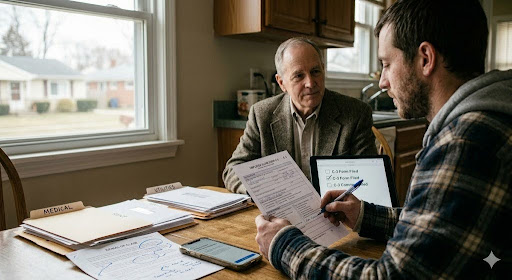
The First 72 Hours After a Job Site Accident Decide Everything

Here’s the mistake I see most often, and it costs workers everything: a supervisor walks over after an accident, looks at the situation, and says, “Let’s see how it feels tomorrow before we make it a whole thing.” The worker—already shaken, maybe in pain, definitely worried about looking weak or causing drama—nods and goes home.

By the time tomorrow becomes next week, the injury hasn’t improved. But now the employer’s insurer has a gap in the timeline. The medical records don’t start until days after the incident. The supervisor’s verbal assurance has evaporated. And the injured worker is left trying to prove that a real injury happened at a real job site, while the paperwork tells a different story.

I’ve been on the other side of that paperwork. I’ve audited claims. I know exactly what adjusters look for when they want to question whether an injury was work-related. The 72 hours after a construction accident aren’t just important—they’re often the entire ballgame.

What the First Hours Actually Look Like (And What They Should Look Like)

Most workers I talk to describe the same sequence. Something happens—a fall, a tool strike, a sudden back spasm lifting materials. There’s a moment of shock. Coworkers gather. A foreman shows up. Someone says “you okay?” and the instinct is to say yes, or at least “I think so.” Nobody wants to be the guy who shuts down the job.

What should happen instead: the injured worker gets moved away from the hazard immediately. Site safety protocols are clear that removing workers from an active hazard area and blocking it off isn’t optional—it’s the first response. That’s not about drama. It’s about preventing a second injury and creating the physical record that something went wrong at that location.

Then, before anything else, the injury gets reported to the supervisor on record. Not mentioned in passing. Reported. That distinction matters more than most workers realize until it’s too late.

The Timeline That Protects You

Don’t let anyone simplify this into “just report it when you’re ready.” Each window has a specific function in the claims process, and missing one creates a gap that adjusters will find.

Timeframe Action Required Why It Matters
First hour Report to supervisor using specific language about what happened and where Vague language gives adjusters room to argue causation
Same day Seek medical attention at employer-directed clinic or your own provider Delays create gaps insurers use to question whether the injury was work-related
Within 24 hours Employer must report hospitalizations, amputations, or eye injuries to OSHA Federal law requires it; non-reporting is a violation that affects your claim
Within 30 days File your own Employee Claim Form C-3 in New York Your employer’s paperwork doesn’t cover you—this form is yours alone

That last point trips up more workers than any other. Your employer files their own report. You file yours. Assuming one covers the other is how claims stall for months.

The Comparison That Changes Everything

Let me put two scenarios side by side, because this is where I see workers make the decision that shapes everything that follows.

Scenario A: Worker hurts his shoulder on a Tuesday. Supervisor says to ice it and come back Wednesday. Worker goes home, doesn’t see a doctor, doesn’t file anything. Thursday the pain is worse. He tells the supervisor again. Supervisor fills out an incident report—two days late. Worker goes to urgent care Friday. The insurer receives a claim where the injury date, the report date, and the first medical visit are all different days, with no explanation in writing for the gaps. The adjuster flags it. The claim gets delayed. The worker misses two weeks of pay while the investigation drags on.

Scenario B: Same injury, same Tuesday. Worker tells the supervisor immediately, uses clear language about what happened and where. Supervisor fills out the incident report that day. Worker goes to the employer-directed clinic that afternoon, gets examined, and the doctor notes the mechanism of injury in the chart. Worker files his own C-3 form within the week. Everything lines up. The claim moves forward.

The injury is identical. The outcome isn’t.

This is why I get impatient with content that dances around the practical reality: the system isn’t designed to help you. It’s designed to process claims efficiently, and “efficiently” often means finding reasons to question or reduce them. Your job in the first 72 hours is to make the timeline airtight.

Documenting What Happened—Before Memory Fades

Documentation isn’t just for lawyers. It’s for you, right now, when details are still fresh.

At the scene:

  • Photograph the location before anyone cleans it up or moves equipment
  • If there was a wet floor, a broken rung, unsecured scaffolding—photograph it
  • Write down the names of coworkers who witnessed what happened and what they saw (don’t ask them to sign anything—just note who was present)

In writing, for yourself:

  • Write your own account of the incident in plain language: what you were doing, what went wrong, what you felt immediately after
  • Date it and keep it somewhere your employer doesn’t control
  • Email it to yourself if you have to

With medical providers:

Be precise. Tell them exactly how the injury happened at work. “I hurt my back” is not the same as “I hurt my back lifting a 200-pound beam on a construction site when the load shifted.” The second version creates a medical record that supports your workers’ compensation claim. The first one leaves room for doubt.

One more thing. If your employer has you sign anything in those first hours—an incident report, a statement, anything—read it carefully before signing. You have the right to review what you’re signing. If something is inaccurate, say so. If you’re pressured to sign something that doesn’t match what happened, write that down too.

When Three Separate Systems Split Into Different Paths

Most injured construction workers think there’s one system handling everything. There isn’t.

Workers’ Compensation is the primary system for most job-site injuries. It covers medical treatment and a portion of lost wages regardless of fault. Your employer’s insurer handles this—which means their interests and yours are not the same. The insurer’s job is to manage costs. Your job is to document everything that supports your claim.

OSHA is separate. Filing an OSHA complaint doesn’t start a compensation claim and doesn’t get you paid. But it creates an official record of hazardous conditions. If you were injured because of a safety violation—unsecured scaffolding, missing fall protection, equipment that wasn’t maintained—an OSHA investigation can establish facts that support a broader legal claim.

Third-party claims are the piece most workers miss entirely. If your injury involved equipment manufactured by a third party, a subcontractor’s negligence, or a property owner’s failure to maintain safe conditions, you may have a personal injury claim outside of workers’ compensation. Workers’ comp limits what you can recover. A third-party claim doesn’t have those same caps. This is why consulting construction accident attorneys in boston matters—not because you’re necessarily suing anyone, but because you need to know which paths are open before they close.

The 30-day mark is a practical checkpoint. By then, you should know whether your workers’ comp claim is moving forward, whether OSHA involvement is relevant, and whether a personal injury attorney has reviewed the facts. After 30 days, some options narrow. Statutes of limitations exist. Evidence disappears. Witnesses move on.

The Objections I Hear Every Time


“I don’t want to make trouble.”

Consider what “not making trouble” actually costs: delayed treatment, unpaid bills, a claim that gets questioned because you waited. The workers I talk to who stayed quiet to avoid conflict are the ones calling me six weeks later in a panic.


“My supervisor said it’s handled.”

Verbal promises don’t appear in claim files. What’s handled in conversation means nothing when the insurer reviews paperwork. If it’s not in writing, it doesn’t exist in the claims process. Get everything confirmed in writing—the incident report number, the name of the medical provider you’re authorized to see, the claim number once it’s assigned.


“I’m worried about retaliation.”

This is real, and I won’t pretend it isn’t. Retaliation for filing a workers’ compensation claim is illegal, but that doesn’t mean it never happens. What protects you is documentation: the date you reported, what you said, who was present. If your hours get cut or your assignment changes after you file, write it down with dates. That pattern becomes evidence.

What “Getting It Right” Actually Requires

Here’s the short version, stripped of everything else:

  1. Report immediately. Use specific language. Say “injury,” not “I tweaked something.”
  2. Get examined the same day. The medical record anchors your claim to the date of injury.
  3. Photograph the scene before anyone moves anything.
  4. Write your own account and store it somewhere you control.
  5. File your own claim form. Don’t assume your employer’s report covers you.
  6. Get everything in writing. Verbal assurances are worth nothing in a claims file.
  7. Know that three separate systems exist—and that a third-party claim may be available even if workers’ comp is already moving.

Workers who come out of this with their treatment covered and their income protected aren’t the ones who got lucky. They moved fast, documented everything, and didn’t take verbal assurances as substitutes for written records.

Your Next Step, Right Now

If you’re reading this after an injury, start with what you can still do. Report to your supervisor today if you haven’t. Get to a medical provider today. Write down what happened while the details are clear.

If you’re past the first 72 hours and worried you’ve already made mistakes—you haven’t necessarily lost everything. But you need a clear-eyed assessment of where the gaps are and how to address them. Talk to someone who knows how claims actually work. A workers’ compensation attorney or intake consultant who handles construction injuries in your area can tell you in one conversation what you’re dealing with and what options remain open.

The window is shorter than most people realize. Don’t wait to find out how short.

The Crucial Role of a Pensacola Injury Lawyer in Fighting for Fair Compensation

Accessing expert legal counsel should be a simple process. At Michles & Booth, located at 501 Brent Ln, Pensacola, FL 32503, we prioritize making our services readily available. We’ve crafted clear directions from notable Pensacola landmarks, ensuring your journey to our office is straightforward and stress-free.

Reaching Michles & Booth: Simplified Navigation:

🚀From Blue Morning Gallery

  • Start by heading east on E Government Street toward S Palafox Street.
  • Turn right onto S Palafox Street.
  • Turn left onto E Cervantes Street/US-90 E.
  • Turn left onto N Davis Highway.
  • Turn left onto Brent Lane.
  • Our office, located at 501 Brent Lane, will be on your left.

🚀From Flora-Bama

  • Start by heading west on Perdido Beach Blvd/FL-292 W/AL-182 W toward State Hwy 182/AL-182 W.
  • Continue onto FL-292 W/Gulf Beach Hwy.
  • Take the exit onto US-98 W/FL-30 W toward Pensacola.
  • Exit at Davis Hwy.
  • Turn right onto N Davis Hwy.
  • Turn right onto Brent Ln.
  • Our office will be on the left.

🚀From Pensacola Beach Gulf Pier

  • Start by heading west on Pensacola Beach Blvd/FL-392 W toward Fort Pickens Rd.
  • Continue on FL-392 W.
  • Merge onto US-98 W/FL-30 W via the ramp toward Pensacola.
  • Take the Davis Hwy exit.
  • Turn right onto N Davis Hwy.
  • Turn right onto Brent Ln.
  • Our office will be on your left.

Why Entrust Your Case to Michles & Booth?

Michles & Booth is committed to providing top-tier legal services tailored to your specific needs. As experienced injury lawyers Pensacola, our attorneys excel in a variety of legal fields, including car accidents, burn injuries, physical discomfort, and emotional trauma. We understand the challenges you encounter and offer compassionate, effective representation. We aim to navigate you through the legal process with expertise and care, ensuring you feel supported and understood every step of the way.

Embark on Your Legal Journey with Us:

Don’t navigate your legal challenges alone. Visit Michles & Booth at 501 Brent Ln, Pensacola, FL 32503, or contact us today to schedule a personalized consultation. Let us provide the expert legal guidance and support you deserve. We’re here to help you achieve clarity and resolution with a warm and welcoming approach.

Driving Directions: From Flora-Bama to Michles & Booth –

https://maps.app.goo.gl/uWyJXgxrhfySzfD2A

What Makes a Personal Injury Attorney in the Bronx Stand Out?

When life takes an unexpected turn, and you require a trusted personal injury attorney Bronx, the path to recovery starts with finding the right legal help. At Fellows Hymowitz & Rice, we re here to guide you every step of the way offering expert legal representation with a focus on personal care and support.

We re located at 888 Grand Concourse, Suite 1-O, Bronx, NY 10451, right in the heart of the Bronx. If you re wondering how to find us from key spots around the city, here s a helpful guide:

🚗 From Bronx Zoo (Approx. 10 minutes, 2.5 miles):

  • Head west on E Fordham Rd toward Southern Blvd.
  • Turn right onto the Grand Concourse.
  • Continue north; our office will be on your left after about 1.5 miles, just past E 138th St.

🚗 From Yankee Stadium (Approx. 5 minutes, 1.2 miles):

  • Head south on River Ave toward E 138th St.
  • Turn left onto E 138th St, then turn right onto the Grand Concourse.
  • You ll find us on the right side at 888 Grand Concourse, Suite 1-O.

🚗 From Fordham University (Approx. 8 minutes, 2 miles):

  • Head south on Grand Concourse toward E 181st St.
  • Continue south for about 1.5 miles; we ll be on your left just past E 138th St.

🚗 From Bronx Terminal Market (Approx. 10 minutes, 2.5 miles):

  • Head northeast on Exterior St toward W 145th St.
  • Turn left onto W 145th St, then turn right onto the Grand Concourse.
  • Continue on the Grand Concourse; our office will be on the left just after E 138th St.

At Fellows Hymowitz & Rice, we understand how important it is to have an attorney who s not just knowledgeable, but who truly cares about your case. Whether you ve been in an accident or suffered an injury due to negligence, we re here to help you navigate the legal process with compassion and expertise.

Come Visit Us Today!We re easy to find, and we re ready to provide you with the guidance you need. If you’re looking for a personal injury attorney in the Bronx, don t hesitate to reach out let s start working on your case together. Call us or stop by our office at 888 Grand Concourse, Suite 1-O today!

CID of Area – https://www.google.com/maps?cid=6399709930159109313

Scalding Burns: Legal Recourse for Victims of Hot Liquid Accidents

The aftermath of workplace injuries can be physically and emotionally challenging. In such instances, understanding the legal time constraints for pursuing a lawsuit is crucial. This article aims to elucidate the concept of the statute of limitations concerning such cases. We’ll delve into the significance of time limits, particularly in seeking legal counsel from a Westchester County work injury lawyer.

Read More

Navigating the Complexities of Spinal Fracture Lawsuits

Suffering a spinal fracture due to an accident is a life-altering event that can lead to significant physical, emotional, and financial challenges. In this article, we will explore the intricate process of navigating spinal fracture lawsuits, shedding light on the complexities involved and the importance of seeking legal representation from experienced Westchester spinal fracture lawyer. Additionally, we’ll discuss the relevance of slip and fall accidents in spinal fracture cases and how they intertwine within the legal framework.

Read More

The Statute of Limitations: Understanding Time Limits for Filing Slip and Fall Lawsuits

The aftermath of a slip and fall accident can be physically and emotionally challenging. In such instances, understanding the legal time constraints for pursuing a lawsuit is crucial. This article aims to elucidate the concept of the statute of limitations concerning slip and fall cases. We’ll delve into the significance of time limits, particularly in the context of seeking legal counsel from slip and fall lawyers and Westchester knee injury lawyers.

Read More

Workers’ Rights 101: What to Do If You’re Injured on the Job

In today’s workplaces, injuries can occur unexpectedly, leaving workers unsure of their rights. Whether it’s a minor incident or a serious accident like a spinal injury, knowing how to navigate the aftermath is crucial. This article explores the essential steps for injured workers to take, from seeking medical attention to understanding their legal options with the guidance of a Westchester workplace injury lawyer. Let’s delve into what you need to know to protect your rights and secure fair compensation.

Read More

Construction Injury Claims: Common Mistakes to Avoid

Construction sites can be bustling hubs of productivity, but they also harbor numerous hazards. Sadly, accidents resulting in injuries are all too frequent in these dynamic environments. If you’ve suffered a workplace injury on a construction site, navigating the legal process ahead can feel overwhelming. Avoiding common pitfalls is crucial to securing the compensation you deserve. Let’s delve deeper into the key missteps to steer clear of when pursuing a claim with a Westchester workplace injury lawyer.

Read More

Burn Injuries in the Workplace: Common Causes and Legal Rights of Injured Workers

Burn injuries in the workplace can be devastating, causing immense physical and psychological suffering to affected individuals. In this article, we’ll delve into the common causes of burn injuries, shed light on the legal rights of injured workers, and emphasize the crucial role of legal support, including the expertise of a burn injury lawyer Westchester County NY and construction accident lawyer.

Read More

Advocating for Justice: How Personal Injury Lawyers Help Broken Bone Victims Obtain Compensation

Westchester broken bone lawyer plays a crucial role in advocating for justice on behalf of broken bone victims. These legal professionals specialize in navigating the complexities of personal injury claims, ensuring that victims receive fair compensation for their injuries. In this article, we will explore the various ways in which personal injury lawyers assist broken bone victims in obtaining the compensation they deserve, with a focus on the expertise of legal marketing agencies in promoting their services effectively.

Read More

From Falls to Machinery Accidents: Navigating the Most Common Work Accidents in Construction

Construction sites are bustling hubs of activity, where workers engage in various tasks amidst heavy machinery and towering structures. Amidst this dynamic environment, workplace accidents can occur, ranging from falls from heights to machinery mishaps. In this article, we’ll delve into the most common work accidents in construction, exploring preventive measures and the crucial role of legal support, including the expertise of a Westchester workplace injury lawyer. Let’s navigate the terrain of workplace safety and legal recourse together.

Read More

Work Accidents and Social Security Disability Benefits: Understanding Your Options for Long-Term Support

Work accidents can have devastating consequences, leaving individuals unable to work due to injuries or disabilities. In such situations, understanding the available support options, including Social Security Disability Benefits (SSDI), is crucial. This article explores the intersection of work accidents and SSDI, shedding light on the role of legal professionals like construction accident lawyer Westchester County and work injury lawyers in helping injured workers navigate their options effectively.

Read More

Medical Malpractice and Wrongful Death: Fatal Brain Injuries Due to Medical Negligence

Medical malpractice resulting in fatal brain injuries is a tragic occurrence that devastates families and raises questions about accountability within the healthcare system. In this article, we explore the intersection of medical malpractice, wrongful death, and fatal brain injuries caused by medical negligence. We’ll delve into the legal recourse available to affected families, with a focus on seeking representation from Westchester wrongful death attorneys.

Read More